 Call Us
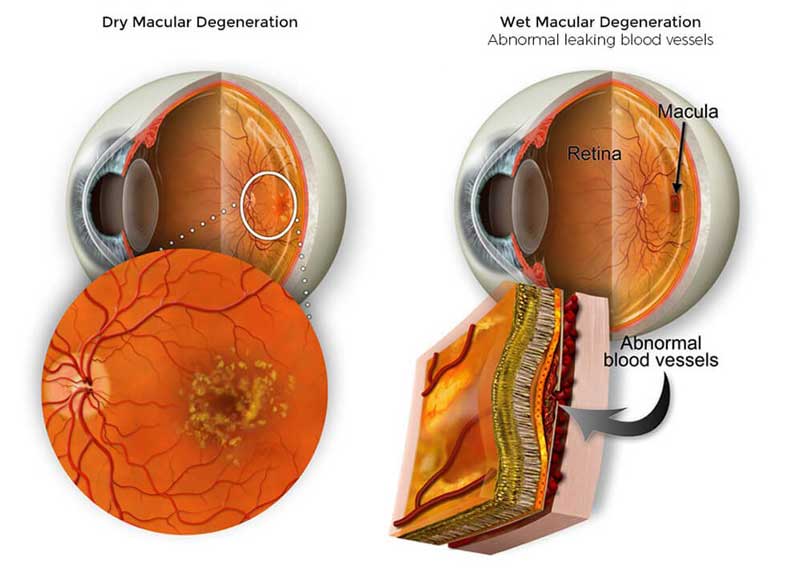
The two primary types of age-related macular degeneration have different causes:

There are several risk factors that can contribute to developing age-related macular degeneration, including:
The following are the most common symptoms of age-related macular degeneration. However, each individual may experience symptoms differently. Symptoms may include:
The presence of drusen, which are tiny yellow deposits in the retina, is one of the most common early signs of age-related macular degeneration. It may mean the eye is at risk for developing more severe age-related macular degeneration. These will be visible to your doctor during an eye exam.
The symptoms of age-related macular degeneration may look like other eye conditions. Speak with an eye care professional for diagnosis.
Age-Related Macular Degeneration Diagnosis
In addition to a complete medical history and eye exam, your eye doctor may do the following tests to diagnose age-related macular degeneration:
Specific treatment for age-related macular degeneration will be determined by your doctor based on:
Currently, there is no treatment for dry age-related macular degeneration, though vision rehabilitation programs and low-vision devices can be used to build visual skills, develop new ways to perform daily living activities and adjust to living with age-related macular degeneration.
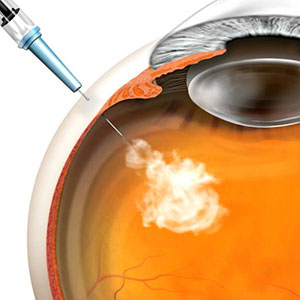
The main treatment for wet AMD is the injection of medications called anti-VEGF agents. VEGF stands for vascular endothelial growth factor. A high level of VEGF in the eye is linked to the formation of the abnormal blood vessels that cause much of the damage in wet AMD. Anti-VEGF agents are used to combat the disease process and reduce the damaging effects of these leaky abnormal blood vessels. They are also able to effectively stabilize vision in many patients.
In some patients, anti-VEGF injections actually improve the level of visual acuity. Anti-VEGF medications are administered by injecting them directly into the affected eye. Although this sounds daunting, the procedure is done with a very fine needle and under the cover of numbing (anesthetic) eyedrops, so patients are usually very comfortable. Anti-VEGF treatment is usually administered regularly over time, requiring multiple injections to maintain the treatment effect, and your retinal physician will discuss the best treatment schedule for you. In selected patients, other treatments, such as laser therapy, can be used, if necessary.
Age-related macular degeneration can result in severe loss of central vision but rarely causes blindness. It can, however, make it difficult to read, drive or perform other daily activities that require fine central vision. In AMD, the health of the peripheral retina is unaffected, so patients can rest assured that their peripheral (side) vision, and their ability to walk around without bumping into things, is usually preserved.